- partheyehospitals@gmail.com
- +91 7011570116

Menu
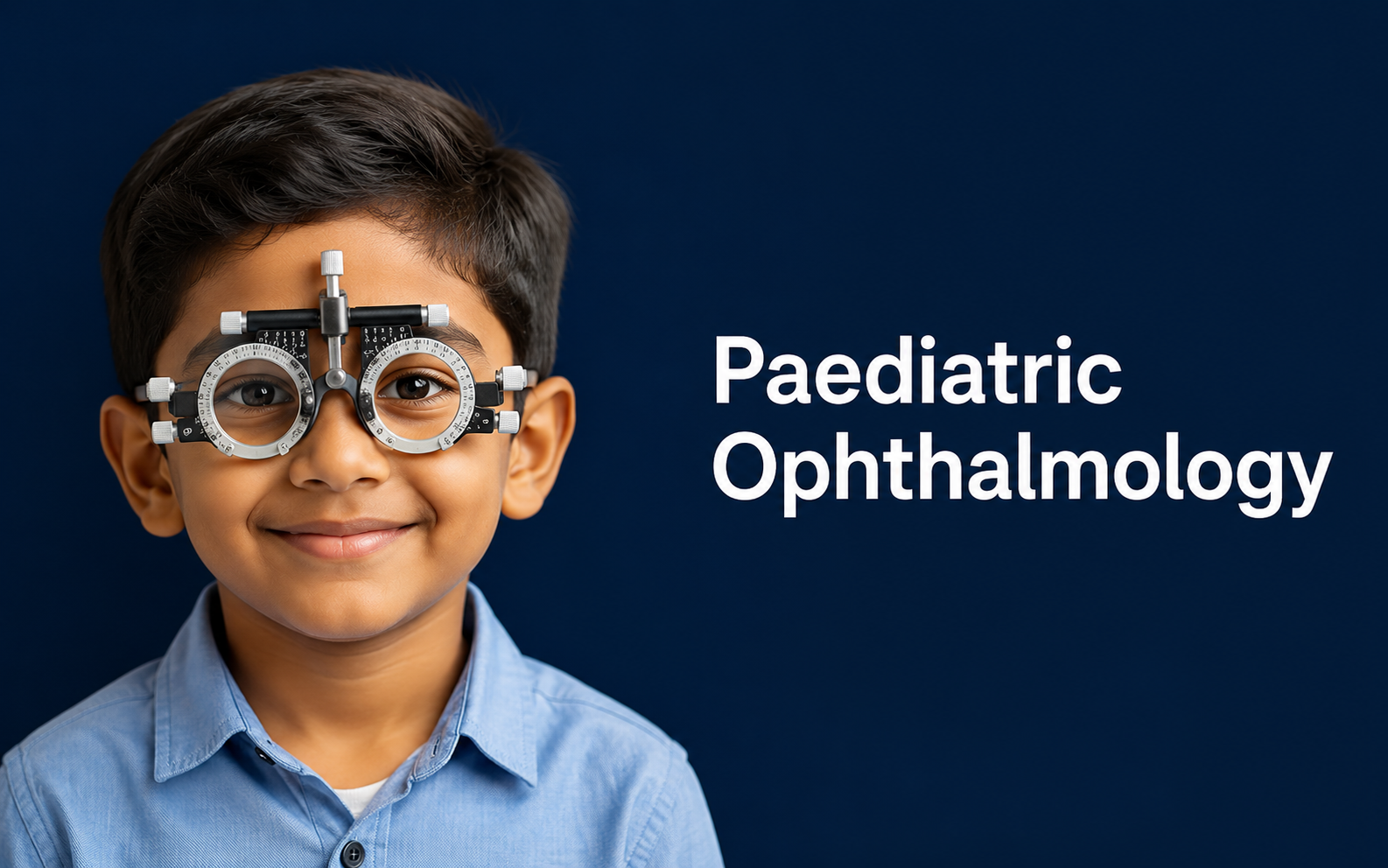
Paediatric Ophthalmology
Paediatric Ophthalmology: Eye Care For Children
Paediatric Ophthalmology is a specialized field of ophthalmology dedicated to the eye health, visual development, and vision care of infants, children, and adolescents. Since the visual system develops up until approximately 8-10 years of age, early diagnosis and treatment of eye problems are crucial to ensuring a child develops good, lifelong vision.
Right Diagonsis
Correct diagnosis is starting point of any treatment
Latest Technology
Globally trusted and clinically proven systems
Expert Doctors
Highly experienced and results-driven specialists
Timely Followup
Timely followup and management
01.
What Is Paediatric Ophthalmology?
Paediatric Ophthalmologists are medical doctors who have completed specialized training in the diagnosis and surgical/medical management of all eye disorders that affect children. They understand how children learn to use their vision and are experts in examining and treating children with care, using techniques and equipment suited for young patients. Their primary goal is to prevent amblyopia (lazy eye), a condition where the brain ignores the visual input from one eye due to poor focusing or misalignment, which can lead to permanent vision loss if not corrected early.
02.
Common Paediatric Eye Conditions
Many eye conditions are unique to children or require specialized pediatric management:
- Amblyopia (Lazy Eye) : Reduced vision in one eye due to an uncorrected error (like a high glasses power difference) or misalignment.
- Strabismus (Squint/Crossed Eyes) : A condition where the eyes do not look in the same direction at the same time (one eye may turn inward, outward, up, or down).
- Refractive Errors : Need for corrective glasses, including Myopia (nearsightedness), Hyperopia (farsightedness), and Astigmatism.
- Paediatric Cataract : Clouding of the eye’s natural lens, which can be present at birth (congenital) or develop later.
- Retinopathy of Prematurity (ROP) : disease of the retina affecting babies born prematurely, requiring specialized screening and management.
- Blocked Tear Ducts (Nasolacrimal Duct Obstruction) : Causing excessive tearing (epiphora) and mucus discharge in infants.
- Childhood Glaucoma : High eye pressure causing damage to the optic nerve in children (though rare).
- Ptosis (Drooping Eyelids) : Can block vision and interfere with normal visual development.
03.
Signs A Child Needs An Eye Exam
Since children may not be able to articulate vision problems, parents and educators should look for these observable signs :
- Misalignment or Squinting : One eye turning in, out, up, or down, or frequent squinting or closing of one eye.
- Head Tilting/Turning : Consistently tilting or turning the head to one side to focus or read.
- Poor Visual Focus : Not making good eye contact (in infants) or difficulty tracking objects.
- Holding Objects Close : Sitting too close to the TV or holding books/toys extremely close to the face.
- Blinking/Rubbing : Frequent eye rubbing, blinking, or eye strain complaints, especially after activities like reading.
- Eye Appearance : A white or cloudy appearance in the pupil, or one eye appearing unusually larger than the other.
- Chronic Tearing/Discharge : Excessive or chronic watering of the eyes and discharge that is not due to a temporary infection.
Paediatric Treatment At Parth Eye Hospital
Paarth Eye Hospital offers a dedicated Glaucoma clinic equipped with state-of-the-art diagnostic and treatment technology to detect and manage the disease:Early Screening and Refraction
- Comprehensive eye exams tailored for children, including specialized refraction (power check) to detect refractive errors and differences between the eyes that cause amblyopia.
Amblyopia Management
- Treatment involves prescribing the correct glasses and often includes Patching Therapy (covering the stronger eye) or using special eye drops to encourage the weaker, "lazy" eye to develop better vision.
Strabismus Treatment
- Managing squint using corrective glasses, vision therapy/exercises, and performing Strabismus Surgery to realign the eye muscles when non-surgical methods are insufficient.
Paediatric Cataract Surgery
- Timely surgical removal of the cloudy lens and often implantation of an intraocular lens (IOL) to restore the visual pathway.
ROP Screening and Treatment
- Specialized screening for premature babies (Retinopathy of Prematurity) and prompt treatment using Retinal Laser or Intravitreal Injections to prevent vision loss.
Blocked Tear Duct Management
- Conservative treatment through massage, and if persistent, surgical probing to open the blocked drainage system.