- partheyehospitals@gmail.com
- +91 7011570116

Menu
Dry Eye Treatment
What is Dry Eye?
Dry eye disease, also known as dry eye syndrome, is a common, chronic condition that occurs when your eyes are unable to maintain a stable, healthy layer of tears to adequately lubricate and nourish the ocular surface. This instability can arise either from the eye not producing enough tears or producing tears of poor quality that evaporate too quickly. The lack of proper lubrication leads to friction, irritation, inflammation, and potential damage to the eye’s surface, resulting in persistent discomfort and sometimes fluctuating vision.
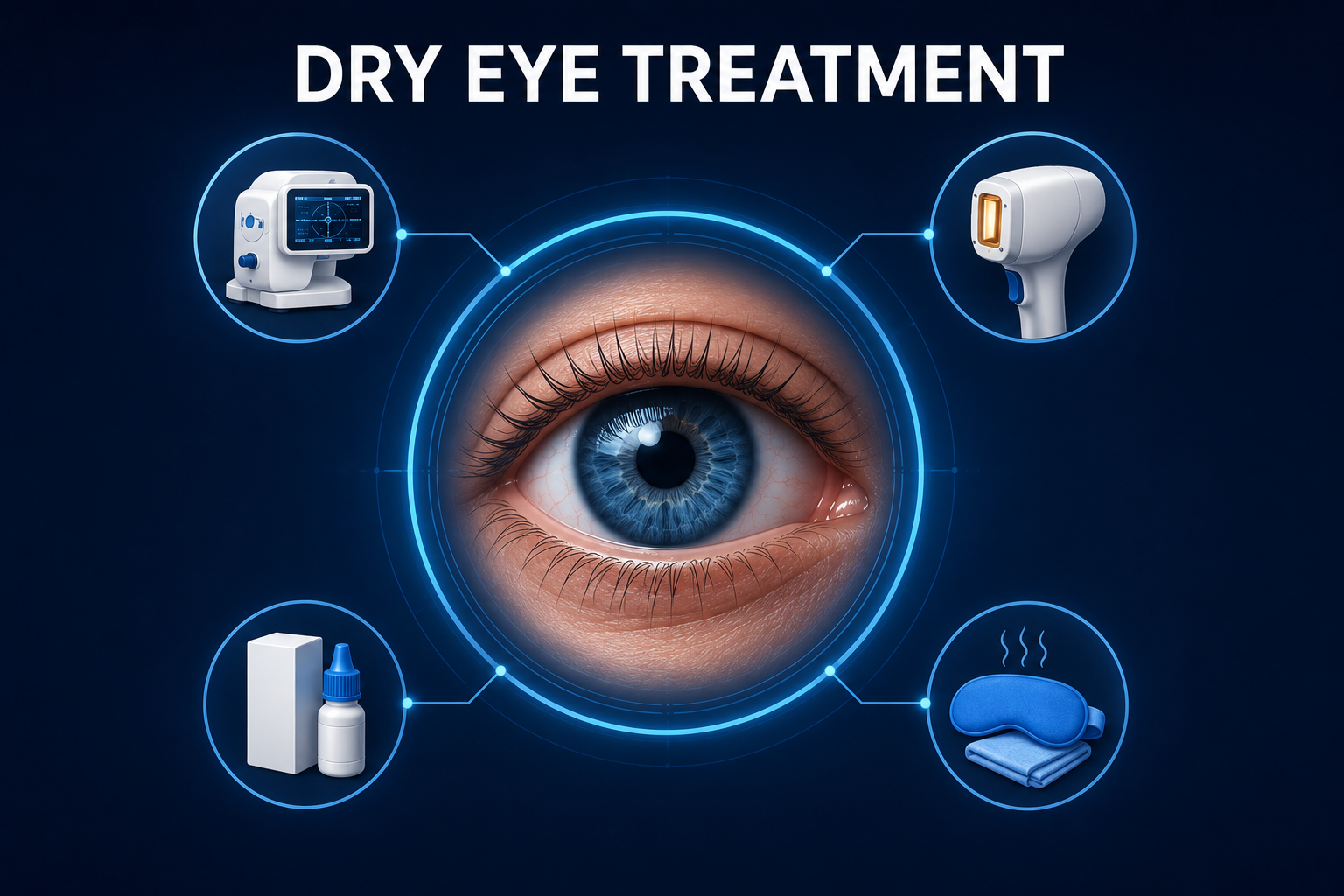
Advanced Diagnosis
Sophisticated tool that provides a rapid, non-invasive, and comprehensive analysis of the tear film and ocular surface
IRPL Treatment
Non-surgical procedure delivers optimized light pulses to the periorbital area.
Prescription Therapy
Intense Regulated Pulse Light (IRPL) therapy
Expert Doctors
Highly experienced and results-driven specialists
01.
Symptoms Of Dry Eye Disease
The symptoms of dry eye disease can range from mild irritation to severe, debilitating discomfort.
- A persistent stinging, burning, or scratchy sensation in the eyes.
- A feeling that something is constantly in the eye (foreign-body sensation).
- Eye redness and chronic irritation.
- Increased sensitivity to light (photophobia).
- Stringy or watery mucus discharge in or around the eyes.
- Watery eyes (paradoxical tearing, which is the body’s reflex response to irritation).
- Blurred or fluctuating vision that often temporarily improves after blinking.
- Difficulty wearing contact lenses comfortably.
- Increased difficulty with activities requiring concentration, like reading or night driving.
02.
Who can get dry eye?
- Age : The majority of individuals over the age of 50 experience some degree of decreased tear production.
- Gender : Women are more likely to develop Dry Eye due to hormonal changes, particularly during pregnancy, while taking oral contraceptives, or during and after menopause.
- Medical Conditions : Those with autoimmune disorders (like rheumatoid arthritis, or lupus), diabetes, thyroid problems, or Blepharitis.
- Medications : Use of certain systemic drugs, including antihistamines, decongestants, antidepressants, and some blood pressure medications.
- Environmental Factors : Prolonged exposure to smoke, wind, dry climates, high altitudes, or indoor air conditioning/heating.
- Digital Screen Use : Activities that involve prolonged visual concentration (like working on a computer or reading) lead to a significantly reduced blinking rate, increasing tear evaporation.
- Ocular History : Long-term contact lens wear.
Advanced Dry Eye treatment at parth eye hospital
Parth Eye Hospital is dedicated to providing comprehensive and advanced diagnosis and treatment for Dry Eye Disease, utilizing cutting-edge technology for personalized careAdvanced Diagnosis with IDRA
- We utilize the advanced IDRA diagnostic machine, a sophisticated tool that provides a rapid, non-invasive, and comprehensive analysis of the tear film and ocular surface. The IDRA allows our specialists to precisely diagnose the underlying cause of your dry eye by evaluating tear film breakup time, lipid layer quality, and meibomian gland morphology.
IRPL Treatment (First in Gujarat)
- For patients suffering from Evaporative Dry Eye caused by Meibomian Gland Dysfunction (MGD), we offer Intense Regulated Pulse Light (IRPL) therapy. This non-surgical procedure delivers optimized light pulses to the periorbital area, which helps liquefy obstructed oils in the meibomian glands, improve glandular function, and reduce inflammation.
Prescription Therapy
- Management with advanced prescription eye drops, such as corticosteroids or immunomodulators (like Cyclosporine or Lifitegrast), to decrease underlying eye surface inflammation./span>
Lid Hygiene and Warm Compresses
- Personalized recommendations for home care, including specialized warm compress techniques and eyelid cleansers, to manage Meibomian Gland issues.