- partheyehospitals@gmail.com
- +91 7011570116

Retina Care Treatment
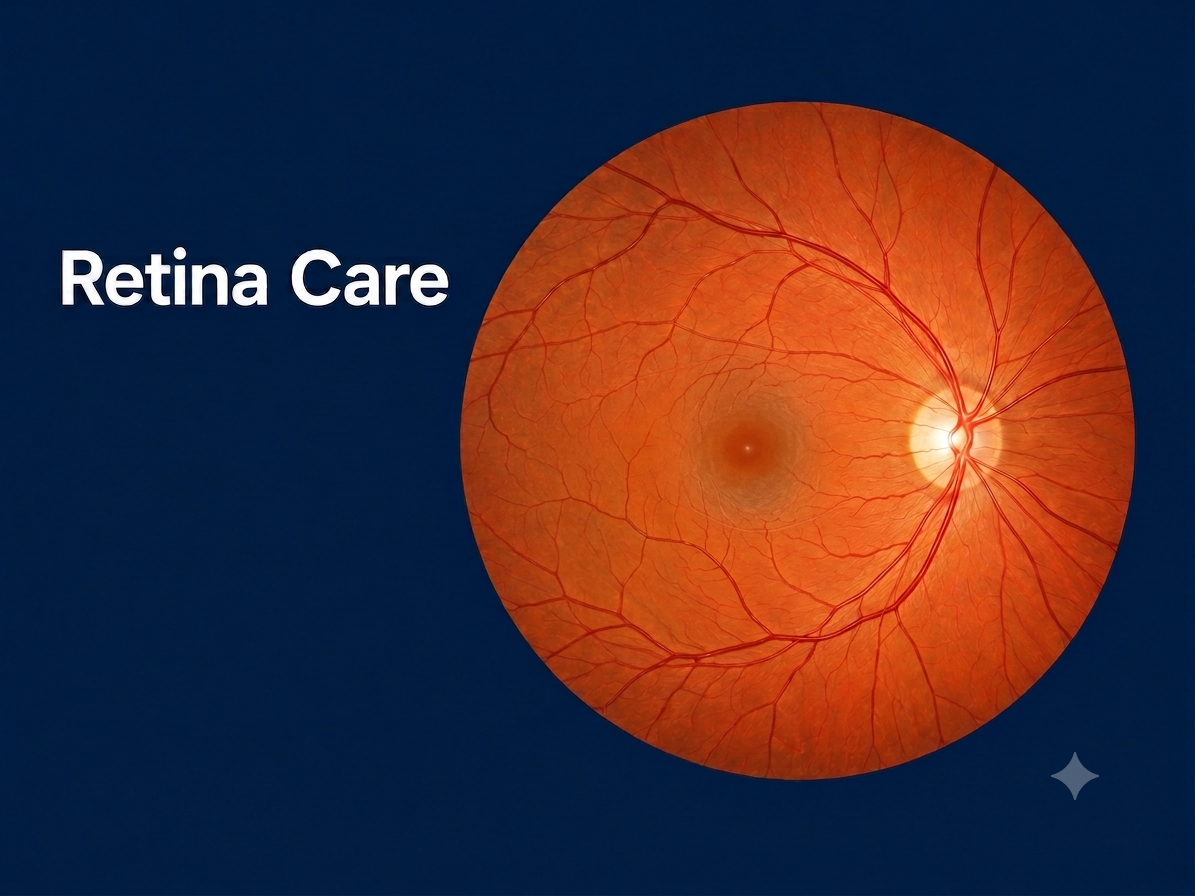
What is the Retina?
The retina is a thin, light-sensitive layer of tissue located at the back of the eye. It functions much like the film or digital sensor in a camera. When light enters the eye through the lens, it is focused onto the retina. The retina is composed of millions of specialized cells, including photoreceptors (rods and cones), which capture the incoming light. It then converts this light into electrical and chemical signals and transmits them along the optic nerve to the brain, which interprets these signals as the visual images we perceive. A healthy retina is crucial for clear and detailed sight.
Laser Surgery
Safer and more precise than manual surgery
Fast Recovery
Minimal downtime and discomfort
Latest Technology
Globally trusted and clinically proven systems
Expert Retina Surgeons
Highly experienced and results-driven specialists
01.
Types Of Retinal Diseases
Retinal diseases are a major cause of vision loss and can affect people of all ages. Common types include:
- Age-Related Macular Degeneration (AMD) : Deterioration of the macula (the central part of the retina responsible for sharp, central vision). It has two forms: dry (most common) and wet (more severe, involving abnormal blood vessel growth).
- Diabetic Retinopathy : Damage to the blood vessels in the retina caused by prolonged high blood sugar in people with diabetes.
- Retinal Detachment/Tears : A medical emergency where the retina pulls away from its underlying support tissue. Tears are small breaks that can lead to detachment if untreated.
- Retinal Vein Occlusion (RVO) : A blockage in one of the veins that drains blood from the retina, leading to leakage of blood and fluid and resulting in retinal swelling (macular edema).
- Macular Hole/Pucker (Epiretinal Membrane) : A small break (hole) or the formation of scar tissue (pucker) on the macula, causing distorted or blurred central vision.
- Retinitis Pigmentosa (RP) : A group of inherited, degenerative diseases that cause a slow but progressive loss of vision, often starting with night blindness and peripheral (side) vision loss.
- Retinopathy of Prematurity (ROP) : An eye disease that affects babies born prematurely, where abnormal blood vessels grow in the retina, potentially causing vision impairment.
02.
What can impact or damage the Retina?
The retina is delicate and can be damaged by several factors, including:
- Chronic Diseases : Uncontrolled Diabetes (leading to diabetic retinopathy) and high Blood Pressure (Hypertension) (leading to hypertensive retinopathy) are major causes of retinal blood vessel damage.
- Age : Simply getting older increases the risk for conditions like Age-Related Macular Degeneration (AMD) and Posterior Vitreous Detachment, which can cause retinal tears.
- Trauma : A direct blow or injury to the eye or head can cause sudden retinal tears, detachment, or bleeding.
- Myopia (Nearsightedness) : Severe nearsightedness stretches the eyeball, making the retina thinner and more susceptible to tears and detachment.
- Inflammation/Infections (Uveitis/Retinitis) : Inflammation within the eye or infections (viral, bacterial, or parasitic) can directly damage retinal tissue.
- Smoking : Increases the risk and progression of several retinal diseases, most notably AMD.
- Medications : Long-term use of certain systemic medications (e.g., some drugs used for autoimmune conditions) can cause retinal toxicity.
03.
Symptoms of a damaged Retina
- Sudden increase in Floaters : Small specks, threads, or cobweb-like shapes that drift across your vision.
- Flashes of Light (Photopsia) : Small specks, threads, or cobweb-like shapes that drift across your vision.
- Blurred or Distorted Central Vision : Straight lines appearing wavy or bent (metamorphopsia), or difficulty reading and recognizing faces.
- Loss of Vision : A sudden or gradual dimming or loss of sight, or dark areas/spots (scotomas) in the visual field.
- A Dark Curtain or Shadow : A shadow or “curtain” moving across your field of vision, which is a classic symptom of a Retinal Detachment.
- Difficulty with Night Vision: Trouble seeing in dim light or adjusting when moving from bright to dark environments.
- Loss of Peripheral Vision: Noticing that your side vision is narrowing, often described as “tunnel vision.”
Retina Treatment Options At Parth Eye Hospital
Paarth Eye Hospital offers comprehensive diagnosis and treatment for a wide range of retinal disorders. Services include:Intravitreal Injections
- Administration of specialized anti-VEGF (Vascular Endothelial Growth Factor) medications or steroids directly into the eye to treat conditions like Wet AMD, Diabetic Retinopathy, and Retinal Vein Occlusion/Macular Edema.
Retinal Laser Treatment (Photocoagulation)
- Using highly focused laser beams to seal leaking blood vessels (in diabetic retinopathy/RVO) or to create tiny burns around retinal tears to prevent retinal detachment.
Surgical Management for Retinal Detachment
- Procedures like Vitrectomy (removal of the vitreous gel to relieve traction and repair the retina) or Scleral Buckling to reattach the retina in emergency cases.
Diabetic Retinopathy Management
- Comprehensive care including regular screening, medical management of the underlying diabetes, and advanced treatments like laser and injections to prevent vision loss.
Retinopathy of Prematurity (ROP) Screening & Treatment
- Specialized screening and timely intervention for premature babies, often involving laser treatment or injections to stop abnormal blood vessel growth.
Diagnostic Procedures
- Utilizing advanced imaging and diagnostic tools to accurately identify the retinal disease and its extent.